


A shivering away in a cold house isn’t the type of cozy winter you pictured. If your furnace breaks when you need it most, you’re not alone. Furnace issues happen to a lot of people, and luckily, it’s almost always fixable. So, if your furnace is not igniting, continue reading to learn how you can troubleshoot it yourself—and how we can help if all else fails.
Quick Checklist: Furnace Not Igniting? Start Here
If you’ve realized your furnace is having problems turning on, the first thing you should do is to remain calm. And if you’re on our blog, you’re in the right place.
We recommend following this simple checklist for quick troubleshooting.*
- Check the thermostat
- Ensure the power switch is on
- Inspect the furnace filter
- Look for error codes or blinking lights
*Important: If you smell gas, leave your home and call 911.
6 Reasons Why Your Furnace is Not Igniting
The hard part in all this is determining the source of the issue, which could be coming from one or more components. However, after servicing hundreds of furnaces over the years, we’ve found that most furnace problems boil down to six reasons.
1. Gas Line Issue
A clogged gas line is one of the most common reasons why a furnace won’t turn on. If your furnace can’t receive a supply of gas, it won’t work. The best solution moving forward here is to call a professional technician to inspect your furnace and gas source for any obstructions.
2. Problems With Your Thermostat
Sometimes a faulty thermostat can be an easy fix. But sometimes it’s not so simple. If you’ve already set your thermostat to the correct temperature and changed the batteries, then there’s another problem going on that should be inspected by a professional.
3. Dirty Gas Burners
Your furnace’s burners might not be able to burn correctly if too much dirt has accumulated on them. This is dangerous because it can create a high amount of carbon monoxide in the system. The best way to prevent this is by blowing compressed air through the burners and cleaning the outside of them with a brush or soft rag.
4. Defective Ignitor or Pilot Light
If your furnace stops working out of the blue, especially after working just fine, then there’s a chance you have a defective ignitor or pilot light. The trick here is to figure out which component isn’t working.
Listen to your furnace as it tries to start; is it making a clicking noise? If so, it probably needs a new ignition system. If it fires for a moment and then shuts off, it probably needs a new standing pilot light.
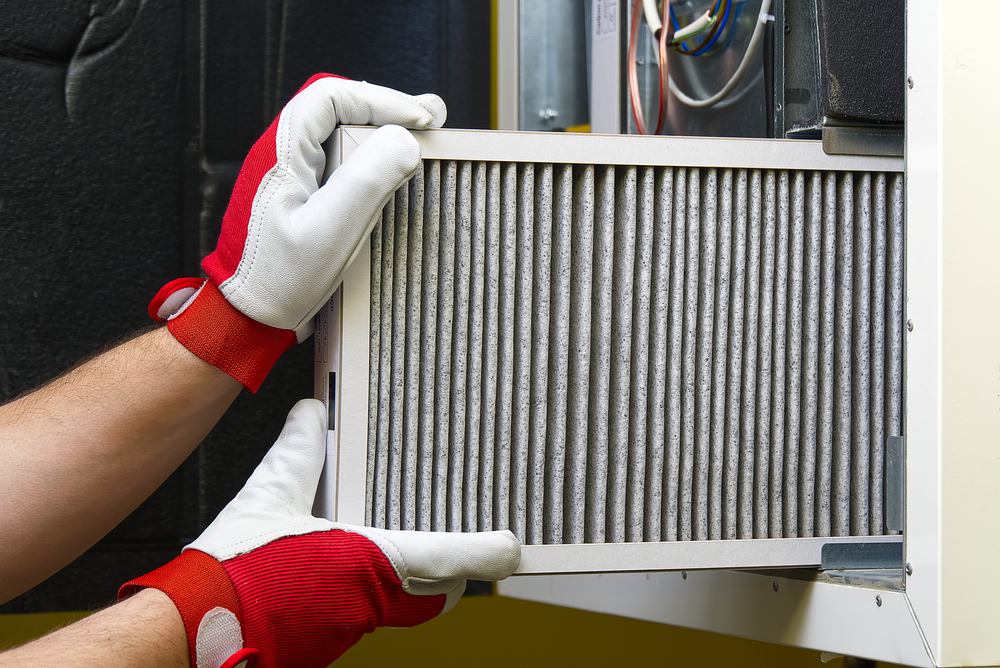
5. Dirty Furnace Filter
A furnace filter is supposed to catch things like dust and debris, but it only works properly if it’s changed every 90 days. If you haven’t changed the furnace filter in a while and your furnace isn’t working, you probably already know the solution.
6. Defective Flame Sensor
A flame sensor detects if a flame is present. If it detects a faulty signal, it shuts down. However, a defective flame sensor can cause your furnace to run continuously, producing high amounts of heat. This can cause your furnace to overheat and burn out.
The best way to fix this is to clean your air vents, unplug the furnace, and call a professional.
How To Fix a Furnace That’s Not Igniting
1. Check Thermostat Settings
Is the thermostat set to the right temperature? Does your thermostat need new batteries? If you have a smart thermostat, double-check that it’s connected to your Wi-Fi.
2. Inspect the Pilot Light
The pilot light is a small flame that remains burning at all times. It’s typically located in the access panel at the bottom of your furnace. If the pilot light is out, relight it by following your manufacturer’s instructions. If it continues to go out, there might be an issue with your thermocouples or gas valves.
3. Ensure the Gas Valve is On
The gas valve must be turned on to supply fuel. If it’s not turned on, your furnace won’t be able to ignite. Manual gas valves should be rotated counterclockwise to fully open; automatic gas valves have a switch or button that needs to be flipped or pressed ‘on’.
If you’ve opened your gas valve to no avail, stop and contact an HVAC technician. A Hunter Super Techs team member can help.
4. Clean or Replace the Ignitor
Is the gas valve on and is the pilot light burning clean? If you’ve checked both, now is the time to check the ignitor. An ignitor is what creates a spark to ignite gas, which then ignites the furnace. Ignitors can develop cracks and other signs of wear and tear over time. Be sure to visually inspect the ignitor for damage.
It’s important to remember that working with a gas appliance can be dangerous, so we always recommend contacting a trained and licensed professional.
When To Call a Professional
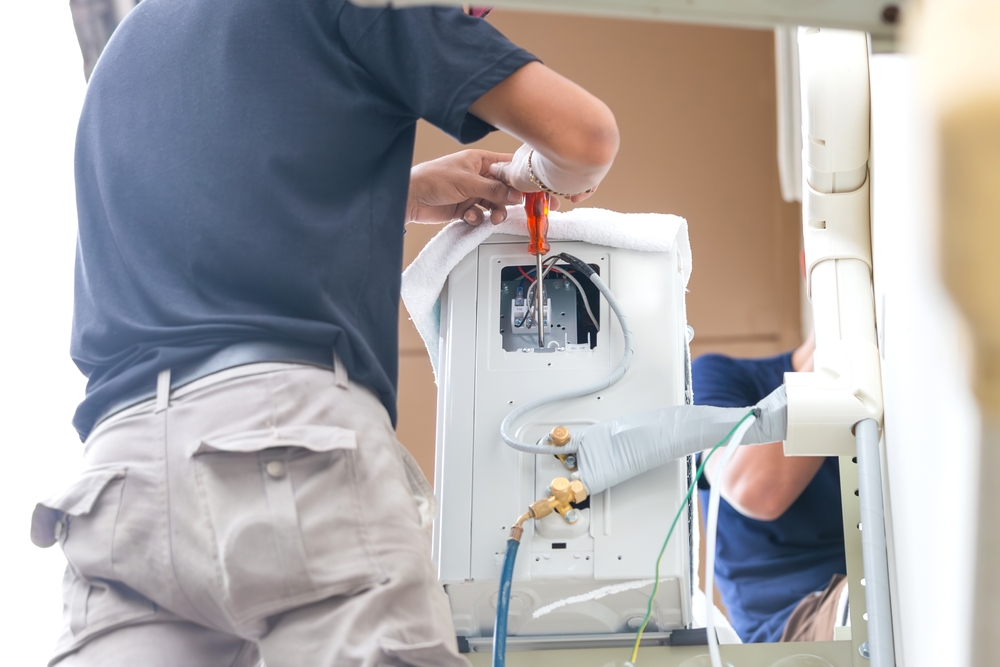
If your furnace still won’t ignite after basic troubleshooting—or you notice issues like repeated clicking, strange smells, or the system shutting down—you should bring in a licensed HVAC technician. Ignition failures can be caused by faulty sensors, gas flow problems, damaged burners, or electrical issues that require professional tools and expertise.
Homeowners in Southern Oklahoma and North Texas should also call a pro if the furnace hasn’t been serviced in over a year or if temperatures are dropping and you need reliable heat quickly.
You should contact a professional if you notice:
- Repeated ignition failures
- Gas odors, burning smells, or unusual noises
- Continuous clicking without ignition
- Short cycling or quick shutdowns
- No heat during a cold spell in Southern OK or North TX
- An aging system or overdue maintenance
Why Furnace Ignition Problems Are Common in Southern Oklahoma & North Texas
Homeowners in Southern Oklahoma and North Texas often deal with furnace ignition problems because of the region’s sudden temperature swings, aging heating systems, and heavy winter usage. Cold fronts can hit quickly, causing furnaces to cycle more frequently and putting extra strain on ignition parts like burners, flame sensors, and ignitors. Local HVAC technicians see these patterns every winter, which makes regional expertise especially valuable for accurate diagnosis and repair.
Regional factors that contribute to ignition problems include:
- Weather conditions that cause gas pressure or airflow fluctuations
- Sudden cold snaps that cause increased furnace cycling
- Older homes with aging or outdated heating equipment
- Dirt and buildup from heavy winter usage affecting ignition components
- Local installation styles and equipment brands common to Southern OK & North TX
How Hunter Super Techs Helps Homeowners in Southern Oklahoma & North Texas Stay Warm
For homeowners dealing with a furnace that won’t ignite, Hunter Super Techs provides fast, reliable service specifically tailored to the heating needs of Southern Oklahoma and North Texas. Our technicians understand the region’s climate, system demands, and common furnace models, allowing us to quickly identify the cause of ignition issues and restore heat when temperatures drop. We focus on safe repairs, same-day service availability, and ongoing maintenance to prevent recurring ignition failures.
Local benefits of choosing Hunter Super Techs include:
- Technicians familiar with common furnace brands used in Southern OK & North TX
- Fast response times during sudden regional cold snaps
- Accurate diagnosis of ignition issues based on local patterns
- Preventative maintenance plans tailored to the area’s winter conditions
- Service coverage across Ardmore, Ada, Durant, Denison, and surrounding communities
Fix Your Furnace Ignition With Hunter Super Techs
At Hunter Super Techs, we work hard to restore the comfort of our customers. You shouldn’t have to go a day without heat, which is why we promise to never charge after-hours or emergency service fees.
With transparent, upfront pricing and award-winning services, it’s easy to see why we’ve become the most trusted name throughout Central Oklahoma and North Texas. Call us today!
Winter can bring sudden cold snaps and surprise ice storms across Southern Oklahoma and North Texas. When the power goes out, a working generator keeps your home safe, warm, and comfortable. Families in Ada, Ardmore, Durant, Pauls Valley, and Denison know that the weather can change fast. Having a backup power system ready before that first freeze makes all the difference. The team at Hunter Super Techs can inspect, maintain, and repair your generator so it’s ready to handle whatever this season brings.
How Cold Weather Affects Backup Power Systems
Cold weather can slow a generator down in more ways than one. Oil thickens when temperatures drop, and that can make the engine harder to start. Batteries lose strength in the cold, so a weak one might not turn over at all. Moisture from condensation can collect in the fuel tank and cause performance problems. In the Texoma region, where a mild morning can turn into a freezing night, this kind of stress happens often. That’s why keeping your backup power system in shape before winter hits is the best way to avoid being left in the dark.
Key Steps to Prepare Your Generator for Cold Weather
Before the first freeze, take a few steps to prepare your system for the months ahead:
- Schedule a home generator inspection to check all key parts and fluids.
- Test your unit under load to be sure it can handle your home’s needs.
- Change the oil and coolant so your engine runs smoothly in cold weather.
- Perform a generator battery check and clean the terminals if needed.
- Inspect the automatic transfer switch for any signs of corrosion.
- Clear away leaves, snow, or debris from around your generator.
Common Generator Problems During Freezing Temperatures
When temperatures drop, generators face several common problems. Some are small annoyances, while others can stop your system completely. Here are a few to watch for:
- Dead or weak batteries that keep the unit from starting
- Thick oil that slows the motor and lowers power output
- Fuel lines or filters that clog or freeze
- Moisture buildup inside the tank
- Worn spark plugs that cause rough starts
- Sensors or electrical parts that fail after a cold snap
Homes in Southern Oklahoma and North Texas see these issues every winter. Regular maintenance before freezing weather sets in helps prevent costly repairs later.
Simple Ways to Keep Your Generator Running Smoothly
Once your system is ready for winter, a few simple habits will keep it running strong:
- Run your generator once a month to keep parts lubricated.
- Keep fuel levels steady and perform regular fuel system maintenance.
- Check for warning lights or messages on the control panel.
- Store extra fuel in a dry, well-ventilated place.
- Follow generator safety tips and always run your unit outdoors.
- Join the Super Comfy Club for regular tune ups and priority appointments.
These small steps make a big difference in how your system performs during an outage.
When to Schedule Professional Generator Maintenance
Even with good care, every generator needs a professional check at least once a year. Before the temperature drops, schedule a standby generator tune up or emergency generator service with a trained technician. They can test electrical output, inspect the automatic transfer switch, and confirm that your system is safe. Hunter Super Techs provides complete backup power maintenance for homes across Southern Oklahoma and North Texas. Our technicians are experienced with all major brands, and financing is available to make seasonal service easier to plan.
Schedule Your Generator Service Before Winter
When the next cold front moves in, make sure your backup power system is ready to go. Call Hunter Super Techs to schedule your generator maintenance today. We’ll help you prepare your home for the season ahead and keep your power steady through every Texoma storm.

When winter settles in around North Texas and Southern Oklahoma, the first thing most folks notice is how fast the utility bill climbs. Heating your home can get pricey when those cold fronts roll through. The good news is, a few simple steps can make a big difference.
At Hunter Super Techs, we have helped homeowners from Ada to Ardmore, Durant to Pauls Valley, and over in Denison, Texas, stay comfortable without overspending. Here is what our team recommends to keep your home warm and efficient this winter.
Why Heating Costs Go Up Around Texoma
Our winters are unpredictable. Some days feel like spring, and then the next morning you wake up to frost on the windows. That kind of back-and-forth is tough on heating systems. They end up running longer, using more energy, and working harder to keep up.
Here are the most common reasons for higher heating bills in this region:
- Older furnaces that strain during sudden cold snaps.
- Ductwork leaks that send warm air into attics and crawl spaces.
- Poor insulation that lets heat escape too quickly.
- Gaps around windows and doors that pull warm air out of your home.
If your heater runs nonstop or some rooms never feel warm enough, that is a sign your system could use a little attention.
Check Your Plumbing Before the Freeze
When temperatures drop below freezing, pipes in garages, crawl spaces, or exterior walls can freeze. Once that happens, they can burst and flood your home in minutes. Before the cold really hits, here is what to do:
- Disconnect and drain outdoor hoses.
- Insulate exposed pipes and outdoor faucets.
- Let a faucet drip overnight during a freeze.
- Have a plumber inspect for weak spots or small leaks.
Every year, our plumbers get calls from homeowners dealing with frozen pipes that could have been prevented. A quick inspection now can save you from an expensive repair later.
Tune Up Your Heating System to Lower Costs
If it has been a while since your furnace had a check-up, do not wait until it quits on a cold morning. A clean, tuned system heats better and uses less energy. Here is what helps the most:
- Change or clean filters every month during winter.
- Have your ductwork inspected and sealed if needed.
- Check attic insulation and replace any that is damp or thin.
- Use a programmable or smart thermostat to manage temperatures automatically.
- Schedule a full system tune-up with a professional before the next cold front moves in.
Our technicians see this all the time. Just cleaning a blower or sealing a small leak can drop a family’s heating costs noticeably. It is one of the best investments you can make before winter.
Cut Energy Waste with Smart Devices
Smart thermostats and timers are an easy way to save money without thinking about it. Many families around Texoma are adding smart home tools that help control energy use automatically. They can help you:
- Adjust temperatures when you are asleep or away.
- Turn lights off automatically with motion sensors or timers.
- Swap out bulbs for LEDs that use less power and last longer.
- Keep walkways and driveways safely lit without wasting energy.
If you have not had your lighting checked in a while, our electricians can perform an outdoor lighting audit. It is a simple way to make sure your lighting is bright, safe, and efficient during those darker winter evenings.
Easy Ways to Stay Warm Without Wasting Energy
Lowering your heating bill does not mean you have to live in a cold house. A few quick adjustments can help your home hold heat longer. Try these simple tips:
- Run your ceiling fans clockwise to push warm air down.
- Seal gaps around doors and windows with weatherstripping.
- Keep curtains closed at night and open them during sunny days.
- Make sure vents are not blocked by furniture or rugs.
- Stay on top of maintenance for your HVAC, plumbing, and electrical systems.
These are small changes, but they add up, especially when the temperature drops fast overnight.
Why Homeowners Choose Hunter Super Techs
People across North Texas and Southern Oklahoma call Hunter Super Techs because they trust us to do the job right. We live here too. We understand what this climate does to your systems and how to keep them running strong through the cold season.
Here is what you can count on when you call Hunter:
- Licensed HVAC, plumbing, and electrical pros who know your community.
- Same-day service whenever possible.
- Upfront pricing with no surprises.
- Friendly, honest advice on keeping your home efficient.
- A team that treats you like a neighbor, not a number.
Whether you are in Ada, Ardmore, Durant, Pauls Valley, or Denison, TX, our team is ready to help you get your home ready for winter.
Schedule Your Winter Prep Today
Getting your home ready before the real cold sets in means fewer problems later. Hunter Super Techs can handle it all, from heating tune-ups to plumbing inspections and outdoor lighting checks.
Give us a call or schedule online to get started. We will help you stay comfortable, protect your home, and lower your heating costs across Southern Oklahoma and North Texas this winter.
A damp and sticky home often leaves people asking: “Why is my house so humid with the AC on?” If your air conditioner is running but your home still feels humid and sticky, you're not alone. High indoor humidity levels, despite a working AC, can be frustrating and even harmful to your home and health.
Continue to learn why your air conditioner might be falling short and how Hunter Super Techs can help restore your indoor comfort.
Understanding AC and Humidity Removal
Most homeowners think of air conditioning systems as cooling machines, but they’re also designed to remove humidity from the air. As warm indoor air passes over the cold evaporator coils in your AC system, moisture in the air condenses into water droplets, which are then drained. This helps lower the humidity level inside your home.
If any part of this process fails, you may notice that your AC is blowing humid air instead of cool, dry air. This can lead to discomfort, condensation, and even mold growth if ignored.
8 Reasons Why Your Home is Humid with the AC Running
There are several mechanical or environmental reasons why your AC might be cooling the air without properly dehumidifying it. Let’s take a closer look at them:
1. Frozen Evaporator Coils
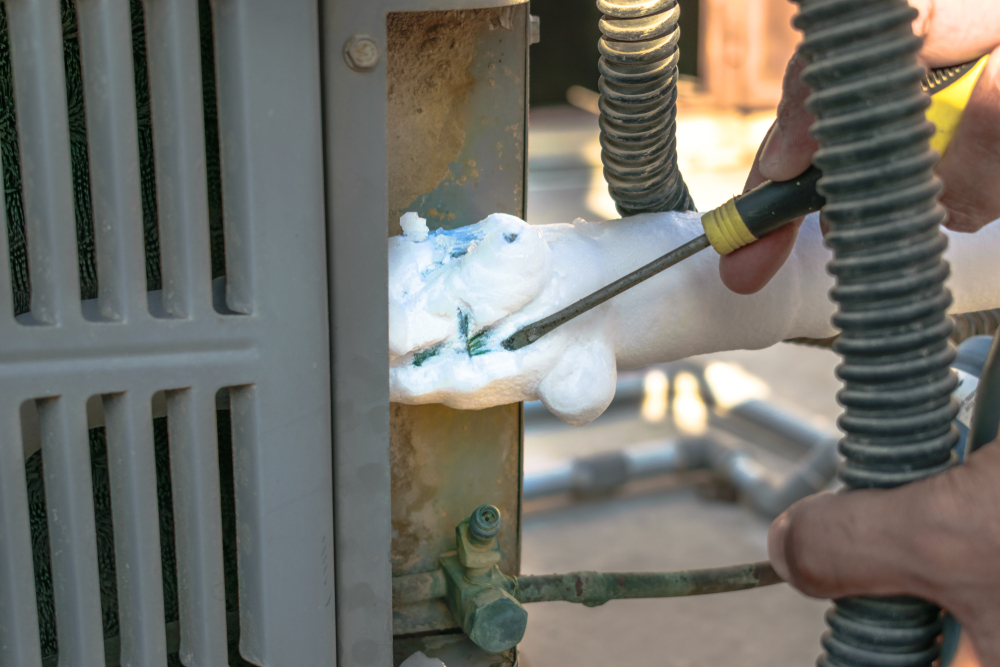
Frozen coils prevent your AC from properly removing moisture. When coils ice over, they can no longer absorb heat or humidity, causing the system to circulate cold, clammy air.
This issue is often caused by restricted airflow, typically due to dirty filters, low refrigerant, or a malfunctioning blower motor. If left untreated, it can damage the compressor, leading to costly repairs.
2. Dirty Condenser Coils
If your air conditioner’s condenser coils are covered in dirt or debris, your unit will have to work harder to cool your home. This can leave your home feeling humid and sticky, especially on hot days when your system is already under strain.
Routine air conditioning maintenance can help prevent this issue and keep your system running efficiently.
3. Aging Air Conditioning System
Older AC systems simply don’t perform as well. Components wear out, refrigerant levels drop, and efficiency declines over time. If your system is 10–15 years old and struggling with both temperature and humidity control, it may be time to consider replacing your air conditioner.
4. Thermostat “On” vs “Auto”
If your thermostat fan setting is switched to “On” instead of “Auto,” your AC’s fan will run continuously, even when the system isn’t actively cooling. This means it could be circulating warm, humid air back into your home between cooling cycles, rather than allowing moisture to be properly removed.
Switching your fan setting to “Auto” allows the system to cycle off when not cooling, giving condensed moisture time to drain correctly.
5. Incorrect AC Unit Size
Bigger isn’t always better. An air conditioner that’s too large for your home won’t be able to work properly, shutting off before it has a chance to dehumidify the air. On the other hand, an undersized unit may run constantly and never quite reach the right temperature or humidity level.
A load calculation performed by an HVAC professional ensures that your system is appropriately sized for your home’s square footage, insulation, and climate.
6. Leaking Ductwork
If your air ducts are leaking, they could be pulling in warm, moist air and redistributing it throughout your home. Leaky ductwork also reduces airflow, making it more difficult for your AC to regulate temperature and humidity levels.
Sealing your ductwork can significantly improve comfort, energy efficiency, and indoor air quality.
7. Dirty Air Filters
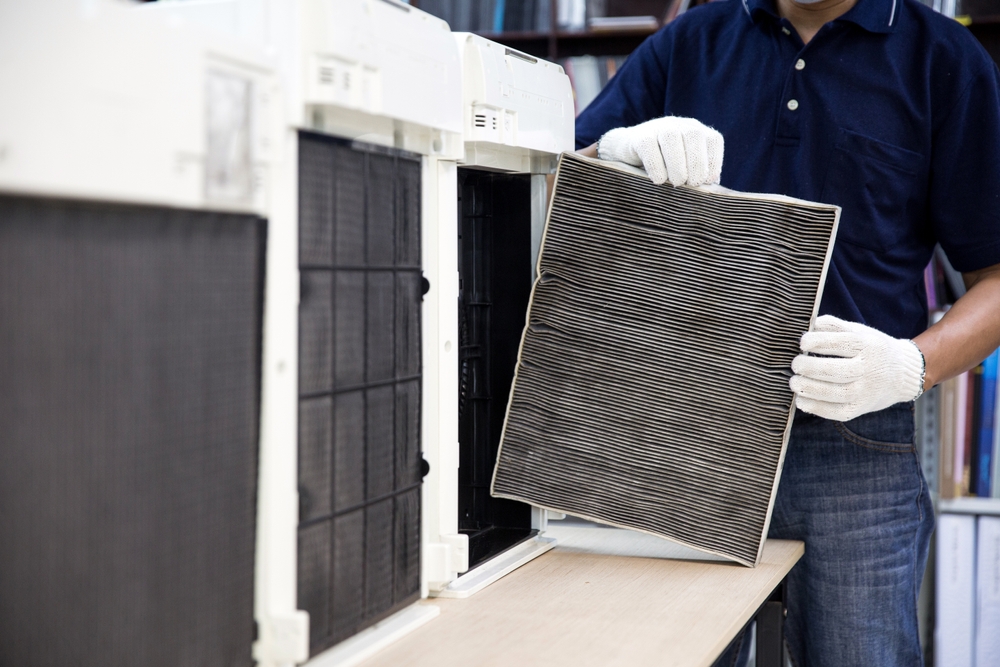
A clogged or dirty air filter restricts airflow to the evaporator coils, which can lead to freezing, decreased efficiency, and—you guessed it—higher indoor humidity. Regular air filter replacement helps maintain airflow and ensures your system can remove moisture from the air.
Make sure to check your air filters every 1–3 months, especially during peak cooling seasons.
8. High Outdoor Humidity
Sometimes, the issue isn’t your AC—it’s the weather. On extremely humid days, even a well-functioning system may struggle to keep up with the excess moisture seeping into your home through windows, doors, or poorly insulated areas. This can be a pervasive problem in the humid climates of North Texas and Southern Oklahoma.
Weatherstripping, dehumidifiers, and improved ventilation can all help mitigate the effects of outdoor conditions on indoor humidity levels.
Solutions and Best Practices for Reducing Indoor Humidity
If you’re experiencing high humidity in your house, try these expert-backed solutions to improve your comfort:
- Switch your thermostat to “Auto” mode - This prevents your fan from blowing humid air when the system isn’t actively cooling.
- Schedule regular air conditioning maintenance - Regular maintenance can catch issues before they become a problem. Learn more about air conditioning maintenance.
- Replace air filters frequently - Dirty filters restrict airflow and contribute to coil freezing. Follow a 30–90 day replacement cycle depending on usage and home conditions. Find replacement options through our air filter replacement services.
- Seal air leaks in your home - Cracks, poor insulation, and gaps around windows or doors allow humid outdoor air to enter. Sealing these areas helps your AC work more efficiently.
- Use a whole-home or portable dehumidifier - Dehumidifiers remove excess moisture your AC might miss, especially during periods of high outdoor humidity.
- Ensure your home’s ductwork is sealed and insulated - Duct leakage pulls in moisture from attics and crawl spaces. Professional duct sealing can prevent this and boost overall comfort.
- Upgrade to a variable-speed AC or zoning system - Modern air conditioners run longer at lower speeds, which improves humidity removal and balances temperatures.
- Consider a replacement if your system is outdated - If your AC is 10–15 years old, an upgrade could solve both cooling and dehumidifying issues. Explore air conditioning replacement options with Hunter Super Techs.
When to Call a Professional
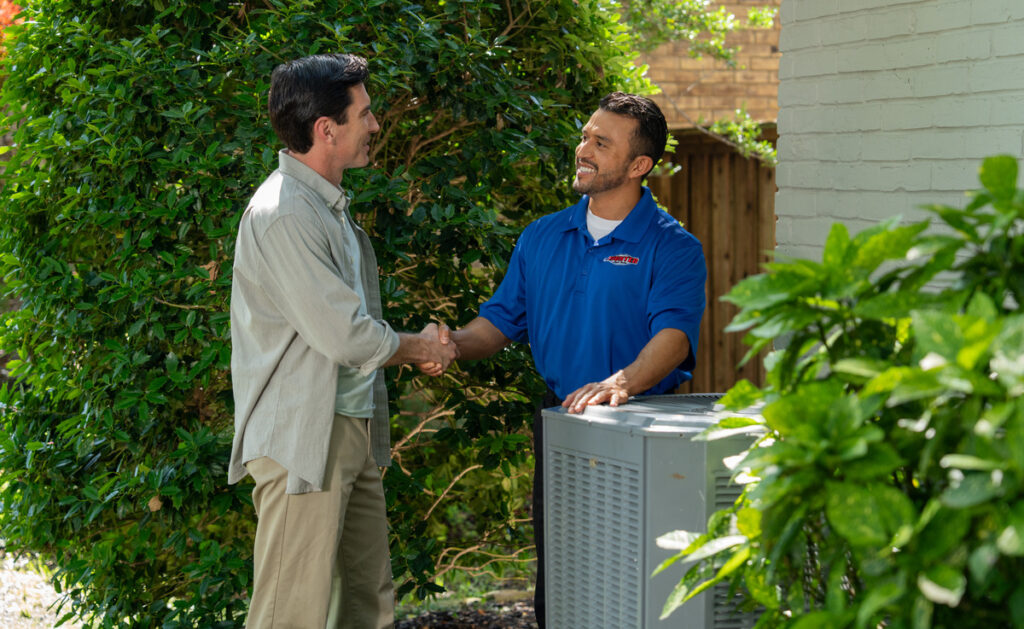
Still wondering why your house is so humid with the AC on? If your AC system has been running constantly but your home still feels muggy, it’s time to call a licensed HVAC technician. Persistent indoor humidity could indicate deeper mechanical issues that DIY solutions won’t fix.
A professional can inspect your system, check your ductwork, and make expert recommendations tailored to your home. Get ahead of the problem and give Hunter Super Techs a call.
Contact Hunter for Professional AC Maintenance
You don’t have to live with sticky, uncomfortable indoor air. Whether your AC is overdue for a tune-up or it’s time for an upgrade, the experts at Hunter Super Techs are here to help.
We’ll inspect your system, diagnose the issue, and recommend the most effective fix so your home stays cool and comfortable all season long. From air conditioning maintenance to replacement, you can count on our team to keep humidity at a low, comfortable level.
Contact Hunter Super Techs to schedule your service and take control of your indoor air.
You don’t have to be an HVAC expert to know something is wrong with your air conditioner. Low refrigerant symptoms can be easy to spot if you know what to look for. Read on to learn about refrigerant, how it works, and how to know if your AC is low on refrigerant.
How Refrigerant Works
An air conditioner can’t blow cool air without refrigerant. Also known as Freon, refrigerant absorbs indoor air heat, transforming it from a gas into a liquid. A fan then disperses hot air over copper coils, releasing it to the outdoors.
Once the compound cools and transitions back to low-pressure gas, a separate fan blows over the cool coils to expel cold air throughout your home.
5 Signs Your AC is Low on Refrigerant
Recognizing a problem with your refrigerant early on is important to prevent bigger issues down the line, such as an uncomfortable space or high monthly energy bills.
1. Weak or Warm Air Flow
A few common low Freon symptoms include weak air flow or warm air. Low refrigerant can actually cause the evaporator coil to freeze, which can affect air flow. You might also feel warm air flowing from the vents, which is another sign that your refrigerant is low.
2. Ice Buildup on Evaporator Coil
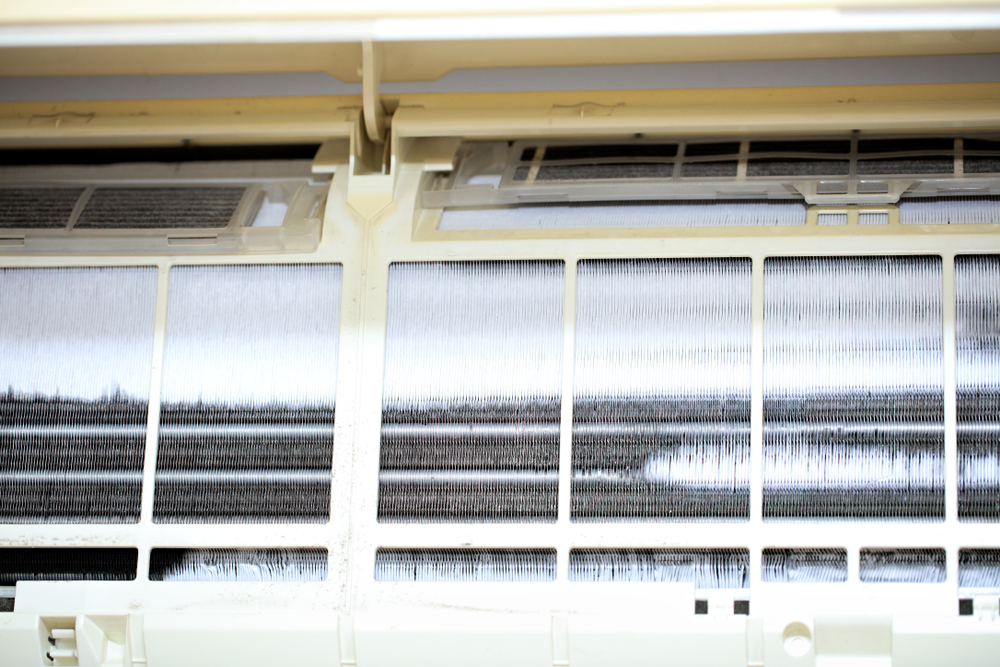
Ice or frost accumulation on your air conditioner isn’t normal and is usually caused by low AC refrigerant. If the refrigerant level drops below normal, the temperature in the unit can drop, resulting in ice and frost formations on the evaporator coil and refrigerant lines.
3. Reduced Cooling Performance
Low refrigerant may restrict your air conditioner’s cooling capacity, causing the system to blow low or weak airflow. If your air conditioner isn’t blowing cool air as usual, take it as a warning sign that it’s time to call a professional.
4. Short Cycling
Is your air conditioner shutting off soon after it turns on? Low refrigerant can cause your AC to short-cycle, which means it turns on and off more frequently than expected. Short-cycling wastes energy, stresses the compressor, and can cause high energy bills. It can also cause the unit to overheat, which can cause an electrical fire.
Any burning smells or strange odors warrant an immediate call to an emergency AC repair technician.
5. Hissing or Bubbling Noises
Your air conditioner should never make hissing or bubbling noises. If it does, the refrigerant may be leaking, which can impact its efficiency and cause further damage if not addressed quickly.
What Can Happen If Your AC Refrigerant Is Low
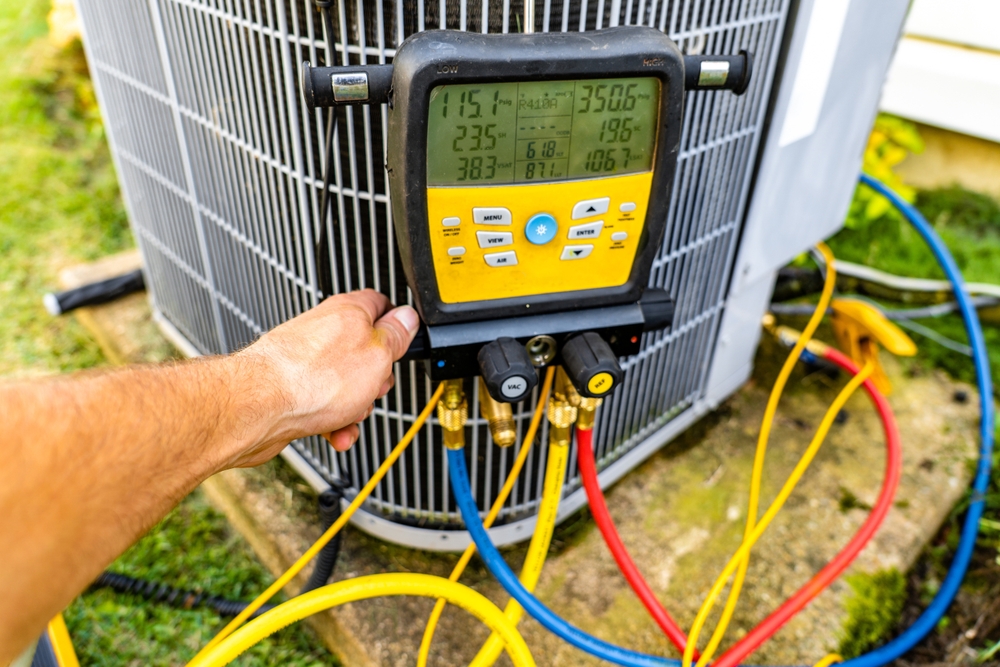
It’s hard to physically spot a refrigerant leak since the chemical blend evaporates when it leaks out. That said, most people spot ice accumulation as one of the first low refrigerant symptoms. Letting refrigerant leak for long periods can result in costly issues and uncomfortable situations if not dealt with.
Broken Compressor
The compressor is the heart of your air conditioning unit. It raises the temperature and pressure of the vapor refrigerant that disperses through the evaporator coil, which is needed to convert the refrigerant into a hot gas. If the refrigerant leaks, it can cause the compressor to overheat and fail.
Increased Humidity
Even though they aren’t dehumidifiers, air conditioners do help remove humidity from the air. If you’ve noticed uncomfortable humidity levels indoors and you don’t have a dehumidifier, there’s a high likelihood of a refrigerant leak.
Reduced Cooling
A common symptom of low refrigerant is reduced cooling capabilities. If your air conditioner isn’t generating cold air as well as it used to, consider it a sign that your refrigerant level is too low.
High Energy Bills
You may have a refrigerant leak if you haven’t changed your energy usage, but your monthly bills keep increasing. A refrigerant leak can cause your air conditioner to work overtime, leading to frequent cycles. This can affect your energy usage, causing monthly bills to skyrocket.
Let’s Fix Your Low AC Refrigerant
Think you have low refrigerant? You’re probably right. Make air conditioner issues a thing of the past by calling Hunter Super Techs. We offer dependable air conditioner repair and tune-up services in Oklahoma and Northern Texas.
Don’t wait for a minor issue to grow into a big problem—let’s fix your air conditioner today. Call us or book an appointment online.
Start With What Matters: What Do You Want to Power?
Generators aren't one-size-fits-all. To find the best fit, start by deciding what parts of your home you want to keep running during an outage.
Partial Coverage
Want to keep the essentials up and running? Think fridge, lighting, Wi-Fi, and the sump pump. A smaller generator can handle these basics and help you weather a short-term power loss comfortably.
Whole-Home Backup
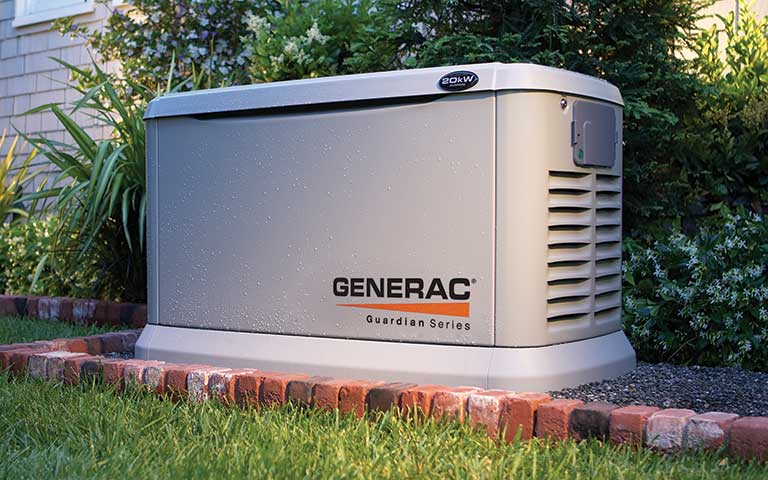
Looking for seamless comfort across the board? A whole-home generator powers your HVAC system, kitchen appliances, water heater, medical equipment, and more. It’s ideal if you work from home, care for young kids or older adults, or simply don’t want to skip a beat when the lights go out.
Our certified SuperTechs work with you to understand your household’s needs and recommend the best-fit system based on your preferences, energy usage, and budget.
Know Your Fuel Options
Different generators use different fuel sources, and the best one for you depends on what’s available at your property and how you plan to use the system.
Natural Gas
This option connects to your home’s existing gas line, giving you a continuous fuel source without the need to refill.
- Best for: Homes with natural gas service
- Benefits: Clean-burning, low-maintenance, ideal for long outages
Propane
If natural gas isn’t available, propane is a great alternative. It stores safely in an on-site tank and powers your generator reliably.
- Best for: Homes in rural or off-grid areas
- Benefits: Long shelf life, burns clean, easy storage
Diesel
Known for efficiency and durability, diesel generators are common in heavy-duty or commercial settings.
- Best for: High-demand or rural properties
- Benefits: High output, reliable under heavy loads
At Hunter Super Techs, we help you weigh your options based on local availability and what fits your energy needs. Our customer-first approach means you get honest guidance—not upselling.
Sizing Your Generator: Why It Matters
An undersized generator won’t deliver enough power—and an oversized one can be inefficient and costly. That’s why getting the right size is critical.
We recommend evaluating:
- Running watts: how much power your devices use during normal operation
- Starting watts: the surge some appliances need to power on
Here's a rough breakdown:
- Basic essentials (fridge, lights, internet): 5,000–7,500 watts
- Partial home (plus furnace fan, sump pump): 8,000–12,000 watts
- Whole-home coverage: 12,000–22,000+ watts
Our SuperTechs use precise load calculations to make sure your generator is sized correctly for your home. That means no guesswork, no stress, and peace of mind when the power cuts out.

Why Professional Installation Makes All the Difference
Installing a generator isn’t a DIY project. It involves complex electrical work, fuel connections, safety protocols, and local permitting. That’s why professional installation is so important.
When you choose Hunter Super Techs, you’re getting:
- Thorough home assessment and generator sizing
- Code-compliant installation and permitting
- Seamless connection to your electrical system via an automatic transfer switch
- Comprehensive testing to make sure everything runs like clockwork
We treat your home with the same care we’d want for our own. That’s what it means to be a locally operated, community-focused business. And it's why we’re the team homeowners across the region trust with their long-term comfort.
Maintenance Matters: Keep Your System Ready
Just like your HVAC system or car, your generator needs regular upkeep to stay reliable. Routine maintenance ensures it’s always ready when you need it—and helps avoid unexpected repairs down the road.
Our generator maintenance services include:
- Oil and filter changes
- Battery inspection and testing
- Software and firmware updates
- Full-system operation checks
Plus, with our comprehensive home services, you can count on one trusted partner to maintain your HVAC, plumbing, electrical, and backup power systems all under one roof. That’s convenience and comfort you can count on.
What Are the Benefits of a Standby Generator?
A backup generator does more than just keep the lights on. It protects your home and peace of mind.
Advantages of a Standby System:
- Automatic operation—no manual setup or extension cords required
- Continuous power—keeps HVAC, refrigerators, and sump pumps running
- Home office support—maintains your internet and tech for remote work
- Safety—ensures medical equipment and security systems stay powered
- Prevents damage—avoids water damage, spoiled food, and frozen pipes
Whether it's for a snowstorm, tornado season, or unexpected utility outage, a generator helps you stay prepared—and we’re here to help every step of the way.
Ready to Power Up with Confidence?
At Hunter Super Techs, we’re here to deliver comfort and security when you need it most. From first consultation to final installation—and every maintenance check in between—we bring certified expertise, local care, and a commitment to excellence.
Why choose us?
- Certified SuperTechs
- One-Stop Home Service Provider
- Transparent, Honest Pricing
- Locally Operated with a Heart for Community
- Personalized Comfort Solutions
Let’s keep your home powered, your family protected, and your comfort uninterrupted—no matter the weather.
Your Comfort. Our Mission.
Are you experiencing issues with a gas appliance? It could be due to a faulty pilot light. If your pilot light keeps going out, it’s usually because of a few common issues. Read on to learn more about how a pilot light works, what makes a pilot light go out, and how our team at Hunter Super Techs can help solve the problem.
What is a Pilot Light and What Does it Do?
A pilot light is a small continuously burning flame that ignites gas to run appliances like water heaters, furnaces, and even gas fireplaces. In other words, a pilot light ignites gas to provide heat.
6 Common Reasons Your Pilot Light Keeps Going Out
Dirty or Faulty Thermocouple
A thermocouple sounds like it would be related to a thermostat, but it’s not. A thermocouple is a safety mechanism that detects if the pilot light is on. Thermocouples can get dirty; if they accumulate enough dust or dirt, they may shut off the gas supply. Remedy this problem by simply cleaning the thermocouple.
Old Furnace System
Nothing lasts forever. Sometimes a faulty pilot light boils down to an old, worn-out heating system. A good rule of thumb is to consider replacing a furnace if it has reached or surpassed the 15-year mark. For water heaters, consider a replacement after the 8-year mark.
Gas Valve Issues
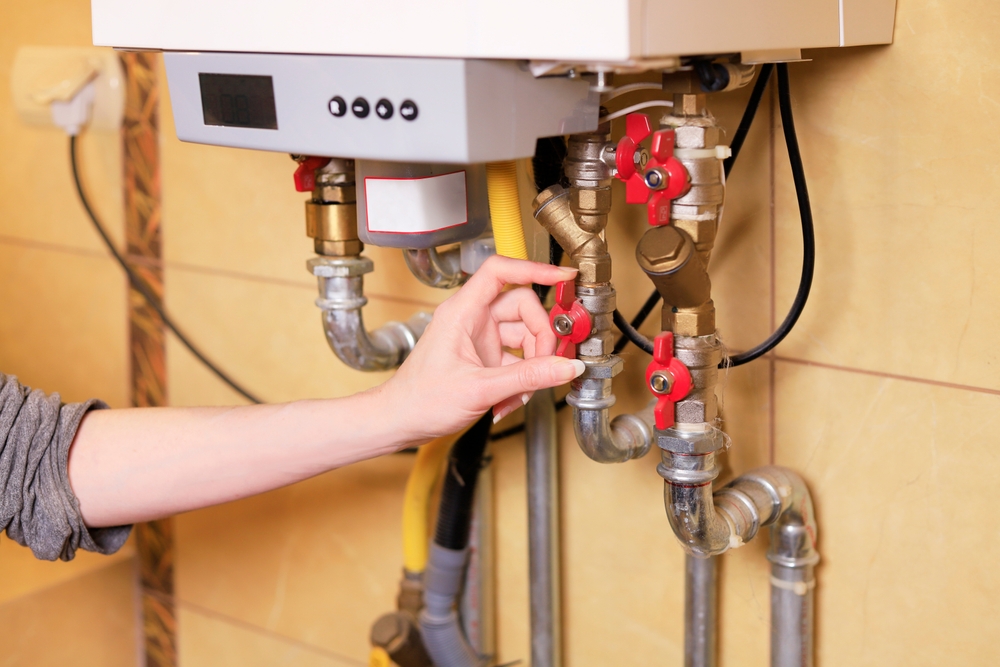
If your pilot light keeps going out, there’s a chance that the gas supply has been compromised. A pilot light needs gas to continue burning—so if there’s no gas, then there’s no pilot light. Check the gas valve; there’s a high chance it’s dirty or malfunctioning.
Dirty Pilot Orifice
A pilot light has a small opening that can easily become clogged with dirt. A clogged pilot orifice can cause issues with the pilot light flame, and can even cause it to go out.
Airflow or Ventilation Issues
Poor ventilation can cause a pilot light to blow out. If you suspect airflow or ventilation problems, check your flue pipe. There could be a problem with how your heating system is venting air.
Cracked Heat Exchanger
A cracked heat exchanger is more common in older heating systems. If cracked, the heat exchanger can affect ventilation and air pressure inside the combustion chamber. This can result in a failed pilot light.
Read More: 6 Reasons Why Your Furnace is not Igniting
How to Fix a Pilot Light That Won’t Stay Lit
Working with a gas appliance is risky, so before relighting your pilot light, turn the gas supply off and make sure all remaining gas has been dispersed. Once you do this, check the thermocouple and pilot orifice. Are they clean? Are they intact? If the answer is ‘yes’ to both, go ahead and relight your pilot light.
To relight, hold down the reset button and use a long-stemmed lighter. Then turn the valve “on.”
If you need additional help relighting your pilot light, either refer to the manufacturer’s instructions or contact a professional HVAC technician.
How to Tell If the Pilot Light is Working Correctly
There are a few ways you can tell if the pilot light is working properly. Simply ask yourself the following questions when inspecting your pilot light.
- Is it burning blue? A healthy pilot light should always burn blue. If it’s burning yellow or red, then it’s not hot enough.
- Is the flame consistent? Your pilot light should burn steadily. If it’s flickering or burning erratically, then something is definitely wrong.
- Is there a single flame? The pilot light should be a single flame. If the pilot light is split down the middle, then dirt or debris could be blocking the flame.
- Is the flame strong? A pilot light should have a strong burn. If the pilot light has a weak burn, then there might be a combustion problem.
When to Call a Professional
We don’t expect you to be an expert at troubleshooting gas appliances. In fact, we recommend calling a professional if you suspect an issue with your pilot light. If you’re unsure what would cause a pilot light to go out, it’s safest to call a professional. Troubleshooting gas appliances without proper training can be dangerous.
A trained technician can get to the bottom of a faulty pilot light fast and can identify other underlying issues. Plus, a technician can advise you on the best ways to prevent future pilot light problems.
Furnace Preventative Maintenance Tips
Unfortunately, your furnace isn’t indestructible, but there are a few things you can do to minimize future problems.
- Frequent Cleaning - Make sure you’re regularly cleaning your pilot light to prevent dirt and debris build-up.
- Regular Inspection - Scheduling annual maintenance with a technician can help catch minor issues early on.
- Seal Drafty Areas - Fix drafty areas around your furnace that could be affecting ventilation.
Check out our Super Comfy Club. It’s the best way to protect your furnace from the unexpected.
Expert Furnace Repair Services in Oklahoma and North Texas
If your pilot light keeps going out on your furnace in the middle of a cold snap, you need Hunter Super Techs. We work around the clock to keep our community safe and comfortable. Whether you’re in Central Oklahoma or North Texas, we’ll never make you wait another business day for heating repair.
Call the super techs for emergency services and pilot light repair—book today.